Goro-Goro and Satoru: Ninjas, Dragons, and One Deadly Loop
Most players pick ninjas or dragons. The ones winning run one feedback loop that does both.

Who Are Goro-Goro and Satoru?
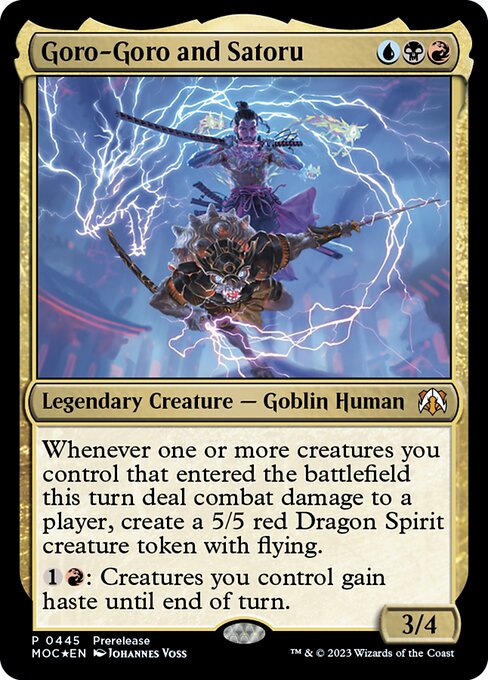
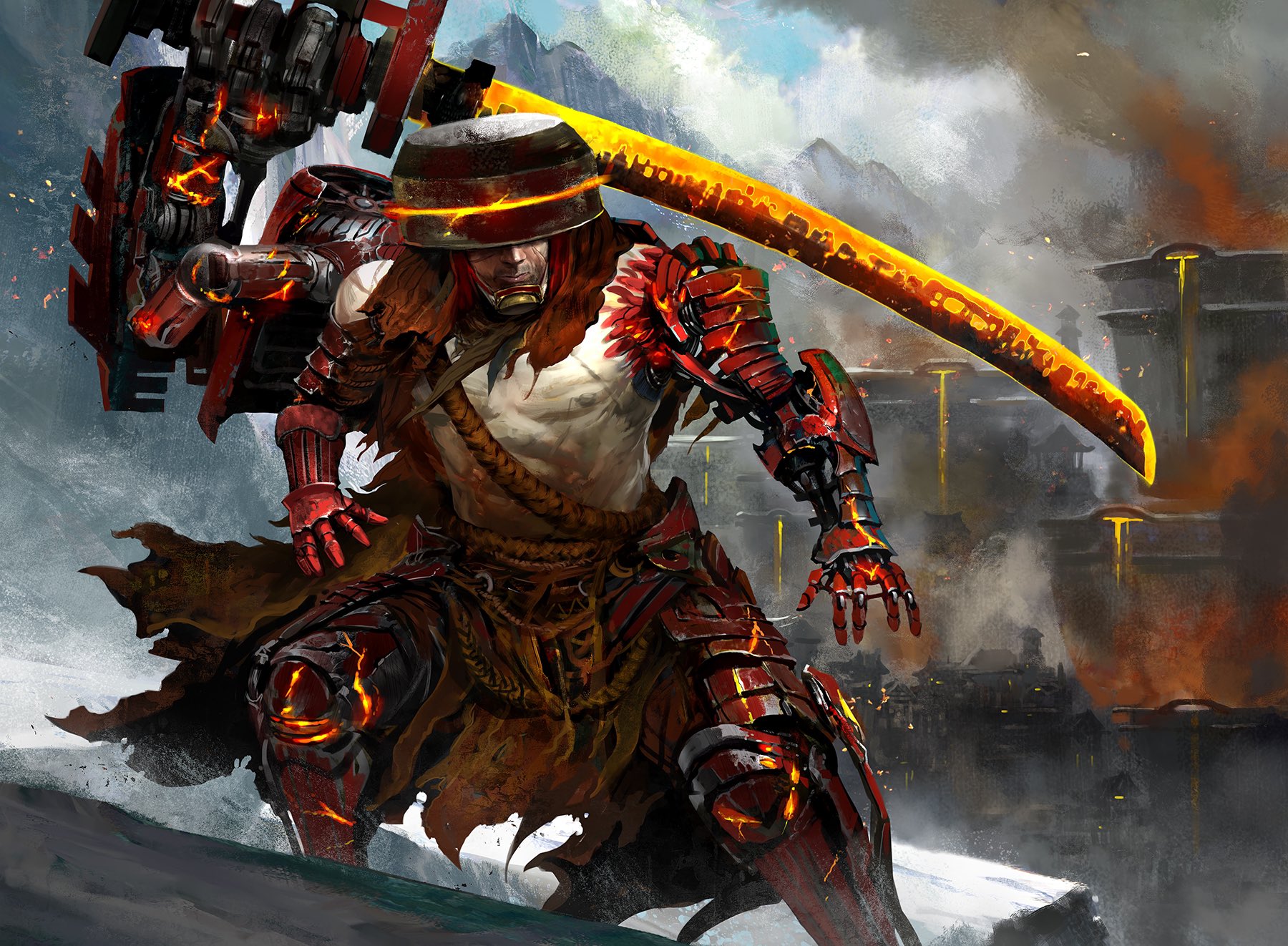
Turn five. Your Slither Blade slides past blockers like it always does. You pay {2}{U}{B}, return it to your hand, and drop Fallen Shinobi tapped and attacking via ninjutsu. It connects. That opponent exiles their top two cards and you cast both for free. And because Fallen Shinobi came down this turn, Goro-Goro and Satoru fires, a 5/5 Dragon Spirit token materializes with flying. That's the moment. That's what this deck is chasing.
Most people see this commander and pick a lane: ninjas deck or dragons deck. The players actually winning with it see one feedback loop. Evasive creature connects, ninjutsu in something better (which came into play this turn), that creature deals damage, a token appears, Dragon payoffs fire, repeat.
The card text precision matters. Goro-Goro and Satoru creates one Dragon Spirit token per player damaged in a combat phase, not one per creature. In a four-player pod you're looking at three 5/5 fliers per swing. The "entered this turn" clause is what makes ninjutsu perfect here: ninjas literally arrive during your attack phase, freshly qualifying every single time. The haste ability has a mana cost, which is not free. Building around that cost is a real design constraint, and it shapes almost every card decision in the 99.
Grixis gives you blue for unblockable evasion and countermagic, black for disruption and graveyard tricks, and red for haste enablers and the damage payoffs that turn a 5/5 token into a kill condition. Grixis is rarely this aggressive, which is exactly why the deck is underrated.
The Plan: Sneak In, Make Dragons, Burn Everyone Down
Turns one through three look like any aggro setup: deploy a one-mana evasion creature, land Goro-Goro and Satoru on turn three, and keep a hand stocked with ninjas ready to swap in. You're not doing anything explosive yet. You're loading the gun.
Turn four through six is where the deck pops off. Your unblockable one-drop connects. You ninjutsu in something that draws cards or steals spells. That creature arrived this turn. Goro-Goro and Satoru triggers. A 5/5 Dragon appears. The board is snowballing before opponents have stabilized.
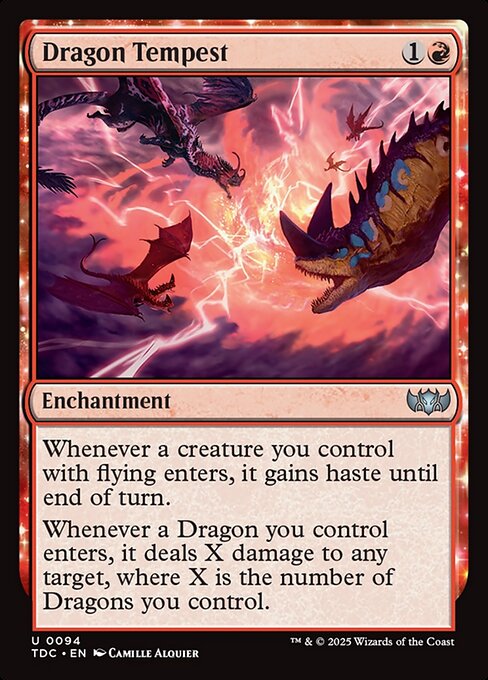
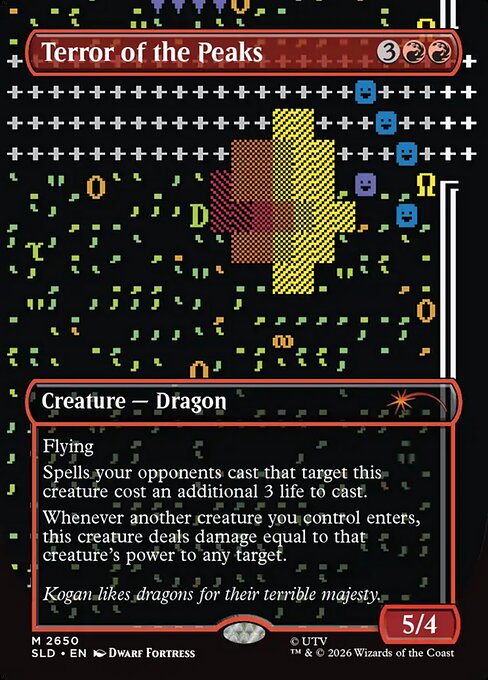
Late game the deck has two shapes. The first: Dragon Tempest and Terror of the Peaks are already in play when your tokens start arriving. Each new Dragon that shows up pings opponents for its power or your total Dragon count, and suddenly they're being burned to death before combat even resolves. The second: you find Breath of Fury, attach it to a flying Dragon, and start a chain that creates a new Dragon every combat and gives you another swing. The table has to answer on the stack or accept what's coming.
The Evasion Package: Unblockable Is Not Optional
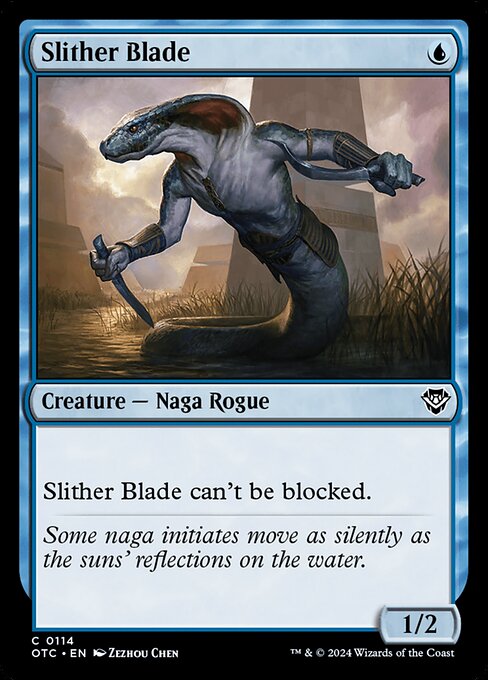
Flying gets chump-blocked. Unblockable doesn't. That distinction is the entire evasion philosophy of this deck.
Slither Blade, Mist-Cloaked Herald, Tormented Soul, and Changeling Outcast are your backbone. One mana, guaranteed connections, expendable ninjutsu vehicles every single turn. None of them are impressive on their own. Combined with ninjutsu, they're the most consistent value engines in the deck. Changeling Outcast is sneaky cracked here: it's every creature type, including Ninja, which means it qualifies for Ingenious Infiltrator triggers and Silver-Fur Master's lord effect. A 1/1 that can't be blocked is quietly doing more work than it looks like.
Reinforced Ronin solves two problems simultaneously. It has haste and bounces itself to hand at end of step. That's a guaranteed ninjutsu enabler waiting for you every turn without spending any additional mana on it. Turn after turn after turn.
Loyal Apprentice is the MVP nobody expected, and it's not particularly close. When your commander is on the board, it creates a 1/1 flying hasty Thopter at the beginning of combat on your turn. That Thopter came down this turn, has haste, can connect immediately, and on its own triggers the dragon-token ability. You're producing 5/5 Dragons from a two-mana Human Artificer, which is the kind of rate that warps how opponents have to play against you.
Tetsuko Umezawa, Fugitive is the force multiplier. Every power-1-or-less creature becomes unblockable, turning your entire evasion suite into a ninjutsu highway simultaneously. Phoenix Chick recurs itself from the graveyard tapped and attacking by paying two red mana whenever two or more other creatures attack. It's a reliable recurring enabler, but budget your mana accordingly.
The Ninja Payload: What Connects When Your One-Drops Get Through
Silver-Fur Master is the lynchpin. The cost reduction on all ninjutsu swaps stacks with every other ninja on board, and the lord effect gives your whole squad a stat bump. This card makes Fallen Shinobi's ninjutsu cost feel like nothing. The difference between a deck that stumbles on mana and one that chains activations every turn is often whether Silver-Fur is on the board.
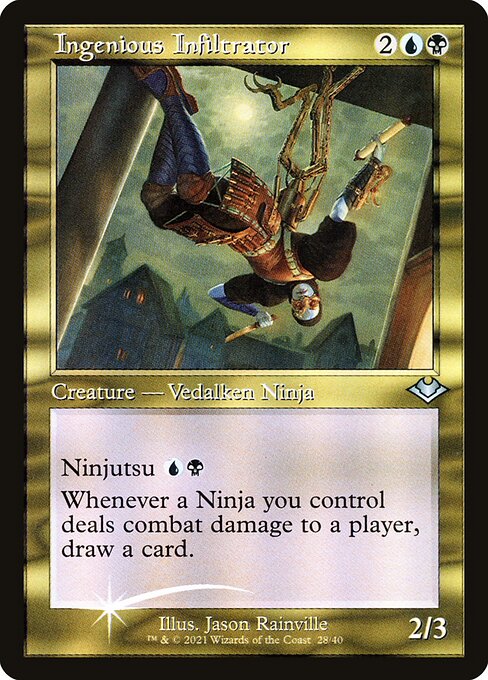
The card-draw ninjas, Ingenious Infiltrator, Moon-Circuit Hacker, and Ninja of the Deep Hours, keep your grip stocked after you've burned resources on swaps. The Infiltrator is particularly busted here because it triggers off any ninja dealing combat damage, not just itself. One connection from any ninja in the squad draws a card. In a deck swapping three or four ninjas per attack, that's a one-sided engine.
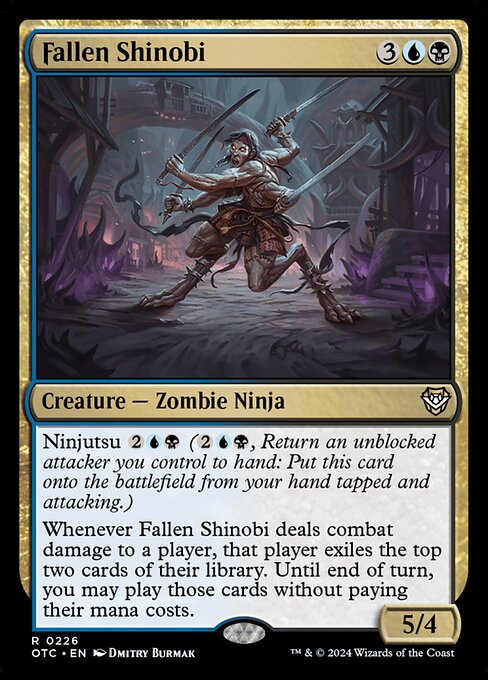
Turn four or five, Fallen Shinobi connects against an opponent. That player exiles their top two cards, and you cast both for free through the end of that turn. Their best ramp piece, their counterspell, their combo piece. The game tilts on one connection, and the advantage compounds from there.
Higure, the Still Wind is a toolbox piece: tutors any ninja from your library on connection, then can make a second ninja unblockable for {2}. Need a finisher? Find the Shinobi. Need card flow? Grab Ingenious Infiltrator. Higure makes the ninja suite feel complete in a way no other single card does.
Yuriko, the Tiger's Shadow in the 99 drains life from every ninja connection and refills your hand simultaneously, working alongside the commander rather than competing with it. Satoru Umezawa the card, not the commander, bridges both halves of the deck: it gives every creature in hand ninjutsu {2}{U}{B}. Mid-swing, you can ninjutsu in a Terror of the Peaks or Goldspan Dragon, getting it into play immediately and qualifying it for Goro-Goro and Satoru's trigger. That interaction is pretty cracked.
Dragon Payoffs: Why a 5/5 Token Isn't Just a 5/5 Token
What people miss: the Dragon tokens your commander creates aren't just threats. They're triggers waiting to fire your payoff engines.
Dragon Tempest is the single most important payoff card in the deck. Each new Dragon entering deals damage equal to the number of Dragons you control. At three Dragons already in play, a fourth entering deals 4 damage to any target. At five, five damage. The scaling goes exponential fast in a deck that produces tokens every swing. Dragon Tempest also grants flying creatures haste on entry, which is critical for the Breath of Fury loop covered in the next section.
Here's the math opponents have to respect: Terror of the Peaks converts every creature entering into immediate damage equal to its power. A 5/5 Dragon Spirit token arriving deals 5 damage to any target on the spot. With Goro-Goro and Satoru triggering up to three times per swing in a four-player pod, that's up to 15 damage distributed after your combat damage resolves. You don't need to connect again. You just need the tokens to keep coming.
Warstorm Surge covers the same ground for one more mana. Redundancy matters when your whole strategy hinges on these payoffs landing, run both.
Ganax, Astral Hunter is shorter on spectacle but quietly essential: every Dragon arrival under your control produces a Treasure, turning your token avalanche into fuel for the next round of swap-ins. Stack enough of those and your late-game ninjutsu chains start feeling free. Crux of Fate is the asymmetric board wipe this deck deserves, destroying every non-Dragon creature on the board while leaving your Spirit tokens completely untouched.
Goldspan Dragon swapped in via Satoru Umezawa generates Treasure on attack and doubles the mana each Treasure produces. That pairs with Prosperous Thief, which creates Treasures on every ninja or rogue connection, and together they build out a full Treasure sub-economy that snowballs harder the longer the game goes.
Win Conditions: The Breath of Fury Loop and What Powers It
This is where the deck stops being a fun aggro deck and becomes genuinely degenerate. Hear me out.
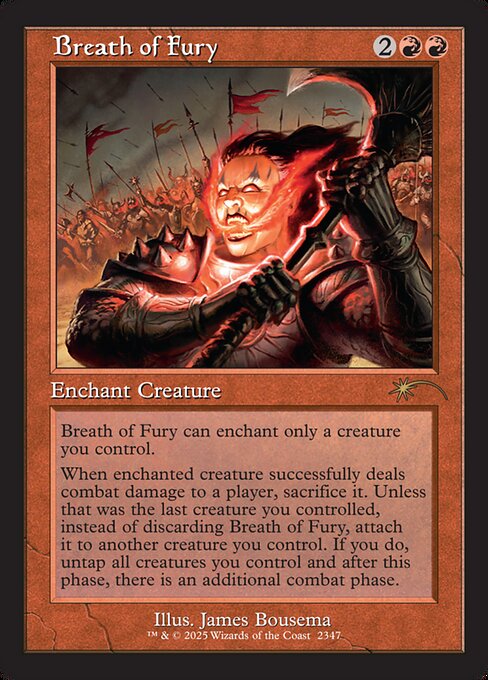
The Breath of Fury loop works like this. You have Goro-Goro and Satoru on the board, Dragon Tempest in play, and Breath of Fury enchanting any creature that can connect. That creature attacks and hits a player. Goro-Goro and Satoru triggers: a 5/5 Dragon Spirit token enters the battlefield this turn. The enchantment grants it haste immediately on entry. Breath of Fury's trigger fires: sacrifice the original attacker, attach Breath of Fury to the new Dragon. Attack with the Dragon. Another hit, another token. The token gets haste. Attach Breath of Fury. Attack again. Repeat.
Dragon Tempest is the required haste source for the loop. Without it, or another haste enabler like Mass Hysteria, Anger in the graveyard, or spending mana on the commander's ability each iteration, the newly created token has summoning sickness and the loop stalls. Terror of the Peaks amplifies the damage each iteration but cannot enable the loop on its own. Build accordingly.
The non-combo path is extra combat spells: Relentless Assault and Seize the Day after declaring attackers, swing again with the fresh flyers you just made, generate more, swing a third time with Hellkite Charger or Karlach, Fury of Avernus pushing through additional combat phases.
Port Razer enables extra combats directly from combat damage and can't attack the same player twice in a turn, rotating through all opponents and draining everyone simultaneously. Blade of Selves equipped on a ninja creates Myriad copies attacking each opponent, each copy a creature that came down this turn, each connecting copy triggering another token from the commander. Equip it to Fallen Shinobi and you're looking at three new Dragon Spirit tokens plus six cards total exiled from opponents' libraries that you can cast for free through end of turn. That's a game-ending turn if I've ever seen one.
I played a game where Dragon Tempest was in play, four Dragons already on board, Breath of Fury on a 5/5 flyer, three opponents at 20 life. The first iteration dealt 5 to an opponent from Dragon Tempest. The second dealt 6. The third dealt 7. Nobody had instant-speed removal for the enchantment. The loop closed before the table could process what was happening. That's the ceiling. It's real.
Draw Engines and Mana: Staying Fueled Through Combat
Grixis doesn't get Cultivate. What it gets instead is a combat-conditional draw package that rewards you for doing what the deck wants to do anyway.
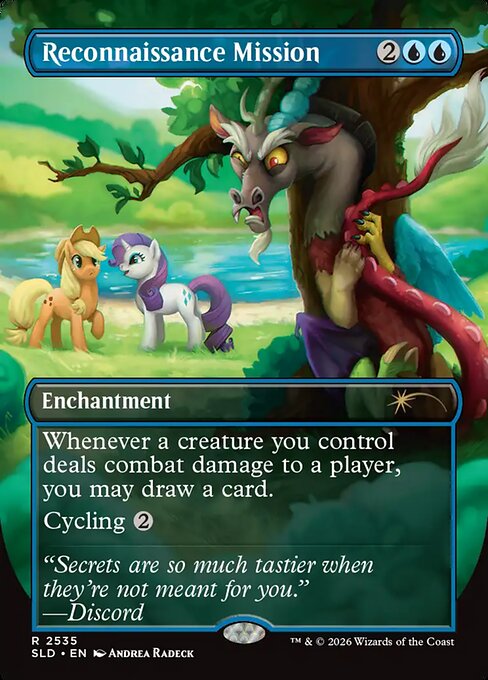
Reconnaissance Mission and Bident of Thassa draw a card whenever any creature you control deals combat damage to a player. In a deck expecting three to six creatures connecting per turn, these become one-sided refill engines that keep your grip stocked mid-combat. Both at the same time? Boom. That's a Howling Mine that only works for you.
Grazilaxx, Illithid Scholar is the hidden gem of the draw package. It draws on combat damage AND lets you bounce blocked creatures back to hand, providing draw even through blockers while enabling opportunistic ninjutsu swaps you didn't plan for. I've had games against heavy-stax tables, opponents with multiple deathtouch blockers they thought were a wall, where Grazilaxx's bounce opened the lane and let me swap in Fallen Shinobi two turns ahead of schedule. The flexibility is cracked.
Prosperous Thief, Ganax, Astral Hunter, Goldspan Dragon, and Professional Face-Breaker replace the green ramp this color identity doesn't have. Every swing generates Treasures that pay for your swaps during the attack. This whole structure is combat-conditional, which means protecting your early attackers isn't just about board state, it's about keeping the fuel flowing.
Mass Hysteria and Anger in the graveyard with a Mountain in play give free global haste, critical redundancy since spending {1}{R} on the commander's ability every turn is mana that could be going toward getting Fallen Shinobi into play. Pick your haste source based on what your opponents are running.
Dragon's Hoard draws a card off every Dragon ETB trigger and taps for any color, drawing and ramping simultaneously every time the commander fires. Jeska's Will is the most efficient burst ramp piece red has, frequently netting six to ten mana on the turn you need it most and optionally exiling three cards from your library to cast. Between the two, you have enough fuel to go from empty-handed to threatening in a single turn.
Removal and Protection: Keeping the Engine Running
This deck wants to be the attacker, not the answer machine. Removal needs to be efficient and asymmetric. Two mana or less wherever possible.
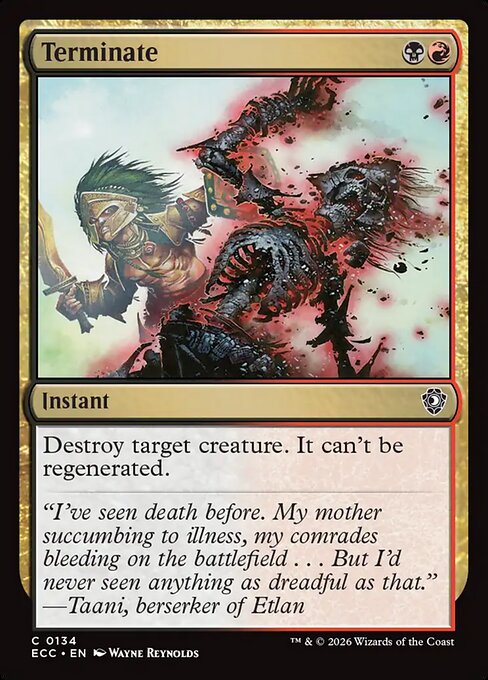
Terminate, Bedevil, Feed the Swarm, and Chaos Warp cover creatures, artifacts, planeswalkers, and enchantments without heavily taxing the mana that needs to go toward combat triggers and swap activations. These aren't exciting includes but they're load-bearing. If a blocker sits on the table two turns in a row shutting down your evasion package, you need to answer it cheaply and move on.
At 13 damage to all creatures after cost reduction, Blasphemous Act kills everything including your Dragons, but at effectively one to three mana once the battlefield is full it's too efficient to cut. Yes, it destroys your dragon tokens. That's fine. You make more.
Toxic Deluge clears X/X boards that Blasphemous Act doesn't always handle cleanly. It costs life instead of mana, which matters in a deck that's generating Treasure and often has life to spare.
Counterspell and Negate protect your combo turns and answer the scary enchantments your creature removal misses. Negate specifically hits non-creature spells that Terminate can't touch, which is most of what actually threatens your gameplan.
Familiar's Ruse is the spiciest counterspell in the suite. Bouncing a creature you control as an additional cost looks like a downside, but in this deck it's a feature: bouncing an evasive one-drop resets your ninjutsu vehicle for another swing, and you're countering a threatening spell at the same time. One card doing two jobs that both advance your board state is hard to argue with.
New Cards Worth Running: 2025 Additions to the 99
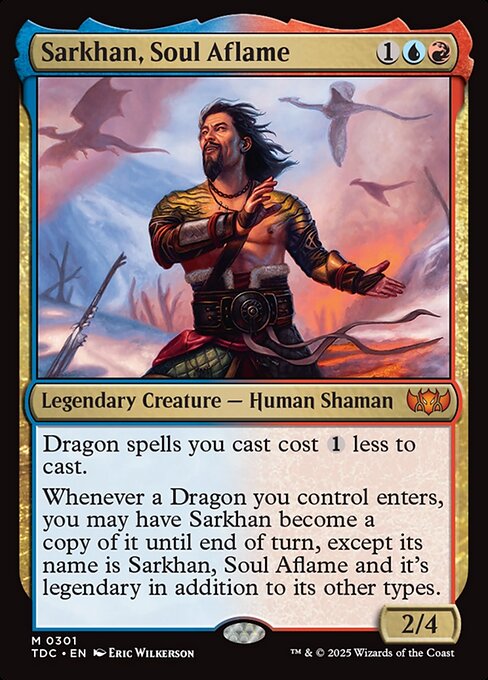
Three recent cards I'm absolutely stoked about for this list. Each one does something the deck was already trying to do but faster or at higher ceiling.
Sarkhan, Soul Aflame reduces Dragon spell costs by {1} and becomes a copy of any Dragon that enters for the rest of that turn. Ninjutsu in a Terror of the Peaks mid-attack, and Sarkhan mirrors it for that whole turn. Every creature that enters afterward triggers both copies dealing damage. With both active in a single swing, Sarkhan functions as a second Terror of the Peaks, so every Dragon entering that phase is pinging twice. All-star.
Thundermane Dragon lets you look at the top card of your library at any time and cast creature spells with power 4 or greater directly from the top with haste for the remainder of the turn. Big Dragon bombs land immediately, satisfy the "entered this turn" clause, and come with haste built in. No commander activation required, no extra mana tax for the speed. That's exactly the efficiency this deck wants: threats that arrive swinging without spending additional resources to make them swing.
Ran and Shaw asks for three Dragon or Lesson cards in your graveyard when you cast it, which by mid-game is genuinely achievable with Dragons dying in combat. Hit the threshold and you get a non-legendary copy entering alongside it. Two 4/4 flyers arriving simultaneously means two triggers for Goro-Goro and Satoru plus the enchantment firing twice off the same spell: direct damage on both entries, double the board presence, all from a single card.
How to Build It: Power Level Dials for Goro-Goro and Satoru
Two real build directions here, not vague guidelines. The swap guidance is specific because "it depends on your meta" is not advice.
Casual build prioritizes the ninja draw engine. Yuriko in the 99 for life drain and card draw, Ingenious Infiltrator and Moon-Circuit Hacker keeping the hand full, Dragon Tempest and Warstorm Surge as the primary payoffs. This version still wins on token accumulation. The Breath of Fury loop is present but you're not specifically engineering every turn around it. Bracket 2-3 energy, fun at any table, and the budget version of this still goldfishes absurdly well.
Optimized build layers in Satoru Umezawa the card to give every Dragon in hand ninjutsu. Add Sneak Attack as a second way to put big creatures into play with haste without caring about the sacrifice clause. Tighten the counterspell suite around protecting the Breath of Fury combo turn. Run Thousand-Faced Shadow to copy your best attacker mid-combat for a surprise extra trigger.
The single include that most dramatically raises your power ceiling: the Satoru Umezawa card. Without it, Dragons have to be hard-cast. With it, any attack phase can become a "ninjutsu in Goldspan Dragon" turn or a "ninjutsu in Terror of the Peaks" turn. That flexibility is what separates a bracket 3 build from a bracket 4 one.
Budget swaps: Toxic Deluge becomes Blasphemous Act, Counterspell becomes Negate, Goldspan Dragon becomes Dragon's Hoard, the ninja cost-reducer becomes Mistblade Shinobi. The spine holds together across price points. The expensive pieces push the deck higher. They're not the foundation.
The Verdict: Is Goro-Goro and Satoru Worth Building?
Build this if you want an aggro-midrange deck that actually rewards technical play. Ninjutsu timing, sequencing the card draw side of your commander, knowing when to hold the Breath of Fury versus jamming it early, reading the table to decide which opponent you're connecting against first. This deck thinks. Generic Grixis control does not feel like this deck feels.
Skip it if you dislike attack-heavy gameplay or want a deck that does interesting things before it establishes board presence. This commander needs creatures connecting to do anything. Against a go-wide blocker setup without Tetsuko Umezawa, Fugitive on the board, you'll feel the floor hard.
The ceiling is real. Breath of Fury plus the haste enchantment with three big flyers already in play is effectively a "kill the table" turn initiated by one unblocked attacker. I've watched this combo close a four-player game from a position that looked like certain defeat three turns earlier. That cycle requires only those two pieces and one connection. Opponents need instant-speed enchantment removal on the stack to stop it. Most pods don't have that ready.
The floor is manageable. Even when the combo is disrupted, the ninja draw engine keeps the hand full and the 5/5 flyers you've accumulated keep applying pressure. You're never doing nothing. You're either piling up card advantage through ninja connections or piling up aerial threats. Either way the table is paying attention to you.
Sneaky. Explosive. Underrated.