Dorks, Rocks, Rituals, Lands: How to Ramp in Commander
Most ramp advice hands you a number. Here is the framework that explains why your ramp is failing.


Most Commander players treat ramp like a single category, something you fill twelve slots with and call it done. You grab Cultivate, a couple rocks, a dork or two, maybe a ritual someone told you was good, and you assume the problem is solved. The problem is not solved. A Cultivate and a Dark Ritual are both "ramp" the same way a bicycle and a motorcycle are both "transportation." The question is not how much ramp you need. It is whether your ramp is doing the right job, because these cards are not interchangeable. They are answering completely different questions about completely different games.
Here is the framework this whole article hangs on. Ramp does one of two jobs. The first job is curving out: getting your commander onto the table on turn three instead of turn five, hitting your key spell on schedule, winning the tempo game in the early turns. The second job is scaling up: building a permanent mana base that compounds over ten or twelve turns, so you can cast two spells a turn when everyone else is casting one. Most players stuff both types into the same deck without distinguishing which job they are actually hiring for, and then wonder why the hand with three acceleration pieces and no lands feels unplayable, or why a Wrath of God left them at two mana on turn six. You have been packing fixers into every deck like a security blanket. This article is about whether that blanket is fireproof.
Land Ramp Is the Baseline. Everything Else Is a Deviation From It.
The math is not exciting but it is load-bearing: 38 lands plus 8 to 13 acceleration pieces is the statistical sweet spot for Commander. Run fewer lands and you cannot cast the ramp that would get you to the lands. That is the trap of the 34-land, 12-ramp build. You see twelve ramp spells and think your mana is covered. But if you miss your second land drop, those spells are dead in your hand. Cultivate costs three mana. You need three mana to cast it. That is not a subtle point. It just gets ignored constantly.
Fetching lands into play resists creature sweepers, artifact hate, and board wipes simultaneously, while permanently fixing your mana base. A land on the battlefield on turn eight is doing identical work to what it did on turn three. Almost nothing else in the ramp category can claim that.
The technical distinction most players miss: Nature's Lore and Three Visits fetch a Forest untapped, meaning you effectively spend one net mana to ramp. Rampant Growth fetches tapped, costing you two net mana. Cultivate and Kodama's Reach also fetch tapped, but they put a second land into your hand, which compensates for the tempo loss and is why running them at three mana still makes sense. Farseek fetches non-basic land types, which matters in multicolor decks where you need shock lands or duals off the search. Each of these is solving a different problem.
The diagnostic test: if you are regularly missing land drops with acceleration sitting in hand, your ratio is inverted. Swap two of those pieces for two lands. The deck will feel smoother immediately.
Mana Dorks Are Great Until the Board Wipe Arrives With Your Name On It
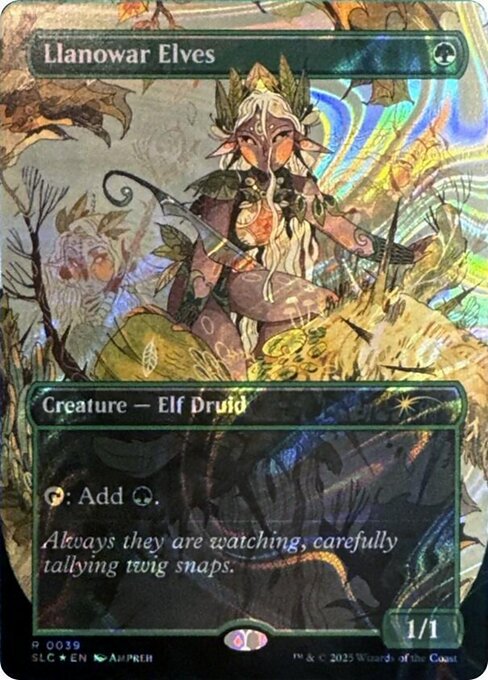
Turn three. You have five mana. Llanowar Elves, Elvish Mystic, Birds of Paradise, all tapping away. You feel like you are playing a different game than everyone else at the table. You are correct, briefly. Then someone casts Blasphemous Act and you go from five mana to two. Every dork you tapped just got Stone Rained simultaneously. Collateral damage from a sweeper aimed at the Krenko board across the table.
You have constructed an accelerated mana engine out of 1/1s that are terrified of fire. And the thing about Commander is that fire shows up. Regularly. At almost every pod above bracket one, someone is running a sweeper. Often multiple. Every single one doubles as land destruction for every dork you control.
This is the precise failure mode: dorks are mana-positive until the sweeper and then mana-catastrophically-negative. They accelerate your curve beautifully in the early turns and then evaporate at the worst possible moment, leaving you with fewer mana sources than someone who ran nothing but basic lands.
Dorks work in elf tribal and aggressive two-drop commanders. Elvish Archdruid and Priest of Titania are not just ramp, they are the strategy. The dorks are the deck. In aggressive builds where you want the mana only on turns one and two and the game is hopefully over by turn five, the fragility is acceptable. But casual midrange Commander with regular mass removal? The invisible cost of running eight dorks instead of eight land-based ramp spells compounds every time someone casts a sweeper. That is a bracket four behavior tax on a bracket two decision.
Rocks Are a Necessary Evil, Not a Universal Answer

The conventional wisdom is that cheap rocks like Sol Ring and Arcane Signet are Commander staples, the safe pick in any deck, the default fill when you are unsure. And then there is the Sam Black counterargument: rocks are fragile to artifact hate, they bait removal before you have used their mana, they substitute for lands you should already be running, and Seth's rock usage has dropped from 100% to about 25% over ten years. Both of these things are true. They apply in different contexts.
The corrected hierarchy: two-mana rocks are genuinely good. Arcane Signet costs two, taps for any color in your commander's identity, and provides durable mana fixing at a dollar. Mind Stone doubles as emergency card draw. Thought Vessel removes your maximum hand size, which is real upside in draw-heavy decks. Three-mana rocks need upside to justify inclusion. Coalition Relic holds a charge and effectively acts as two-mana acceleration when you plan ahead. Hedron Archive can sacrifice itself for two cards when you no longer need the mana, which makes it one of the more honest three-drops in the category. Four-mana rocks belong almost exclusively in artifact-synergy decks, and even then you should be asking hard questions.
Sol Ring sits outside this critique because one mana for two colorless is just efficient in any deck at any bracket. It is so fine it barely needs a sentence. The "rocks are a scam" argument applies most forcefully to green decks running rocks instead of fetching lands, where better options exist and you are choosing the fragile one. In blue or black, where land ramp simply does not exist at scale, rocks are not a scam. They are the only tool in the drawer. The apology rate for running them in those colors is zero.
Rituals Are Not Ramp. They Are a Loan You Take Out on Your Own Mana.
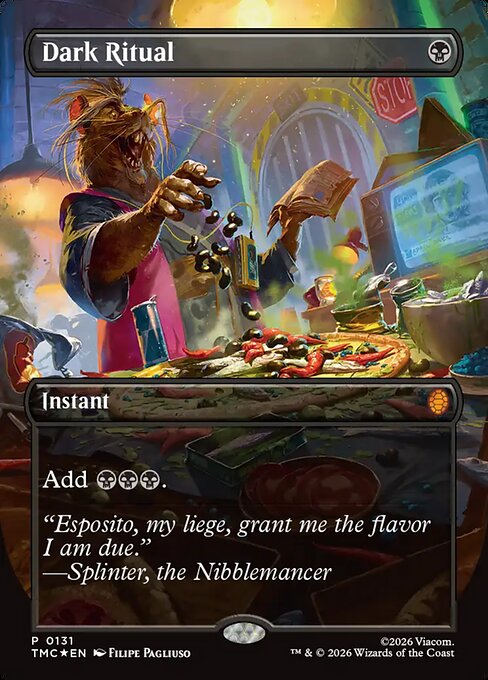
Dark Ritual nets you two mana on paper: spend one, get three. Run that math on turn two when you cast it, deploy a commander, and pass. Now look at your board on turn three. The ritual is gone. The two mana it lent you was spent. You have exactly zero net mana remaining from the deal. That is the mechanism: rituals spike your available mana on one turn and leave nothing behind. You are borrowing from your future turns, spending immediately, and the repayment is that you got nothing permanent out of it.
This sounds like a bad deal. It is a bad deal for most decks. Cabal Ritual, Desperate Ritual, Pyretic Ritual, Lotus Petal, all of them answer the same narrow question: how do I win on turn four instead of turn eight? If your answer is "I don't, I'm a midrange value deck," then these cards are a normal and bad idea. A piece of land-based acceleration does everything a ritual does except it still exists on turn six, contributing to every spell you cast for the rest of the game. The ritual gave you one big moment. The land gave you a career.
When the loan is worth taking: storm and combo decks where you are chaining spells into a win condition on one turn and those future turns being borrowed against are never going to happen anyway. Black combo lines requiring a turn-one or turn-two commander on the table to start the engine. The kind of burst mana production that permanent sources simply cannot front-load fast enough. If your deck is executing a turn-four all-in line, Dark Ritual into a game-winning play is cinema. If your deck is grinding value into turn ten, it is clown shoes. Context is doing all the work.
Color Identity Is the Variable That Overrides Every Other Rule
Green gets to have this entire philosophical debate. Should I run dorks or land ramp? How many rocks do I really need? What is my permanent mana strategy? The other four colors do not get to have this debate. They get to run what is available to them and be grateful.
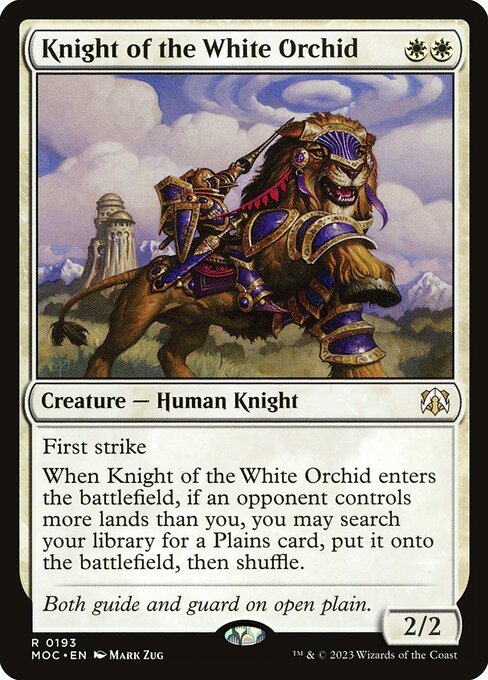
White's ramp suite is catch-up ramp, not proactive ramp. Knight of the White Orchid only works if an opponent controls more lands than you, which means you are already behind. Weathered Wayfarer has the identical condition. These are cards that say: if the game is going badly for you early, here is a consolation prize. Smothering Tithe is its own disturbing category entirely. It is technically an enchantment that generates Treasure tokens whenever opponents draw cards without paying two mana. It is kindling in the truest sense of the word. Play it on turn four and the table immediately has opinions about you, but if nobody kills it, you are generating four to six mana per turn by the mid-game. It is also fifty-seven dollars, which is what it costs to have opinions about you at this particular table.
Black has Cabal Coffers, which is a late-game mana finisher masquerading as ramp. Drop it on turn two with two Swamps in play and it does nothing. Drop it on turn seven with eight Swamps in play and it doubles your Swamp count in mana, enabling plays your opponents cannot match. That is a finisher, not acceleration. Nirkana Revenant operates similarly. Black's actual early ramp is rituals, which are a loan, not an asset.
Blue has almost exclusively rocks, with negligible options for putting lands into play. The "rocks are a scam" debate is a green deck's luxury. For a Dimir or Azorius commander, Arcane Signet is doing real work, so be grateful it exists. On a budget, without dual lands or fetch lands, those rocks are also your color fixing. The philosophical conversation ends when you cannot cast your spells.
The Decks That Win With Almost Zero Ramp
Here is the counterintuitive case: some of the most consistent Commander decks run near-zero ramp and this is a deliberate, correct calculation. Three archetypes where conventional thinking about acceleration breaks down completely.
Ultra-low-curve decks with an average mana value under 2.0 have nothing to ramp into. If every card in your deck costs one or two mana, a Cultivate is actively worse than a third threat because it costs more than the spells it is supposedly accelerating. The accelerant is the most expensive card in the deck. That is a critical lack of self-awareness on the deck's part.
Stax and resource-denial builds mostly should not run rocks, because suppressing everyone's mana makes those artifacts obvious targets for the hate your deck is inevitably generating. Extra lands are more durable, and frankly the deck is already making the table miserable enough. Giving opponents a reason to Vandalblast you before you lock the game down is bracket four behavior from your own deck, against you.
cEDH combo does run "ramp," but the package is Chrome Mox, Lotus Petal, Elvish Spirit Guide, Simian Spirit Guide, and fast mana artifacts. None of these are land fetches. None of them care about permanence. The win turn is turn two or turn three, which means the durable mana advantage that makes Cultivate valuable in a midrange game is completely irrelevant. Chrome Mox and Cultivate share the same job title in their respective decks. They just show up to wildly different offices.
The mechanism that makes all three exceptions work is identical: once you know what turn you are trying to win on, acceleration selection becomes obvious. Generic guidance about ramping assumes a turn-seven to turn-ten game. If that assumption is wrong for your deck, the guidance is wrong too.
The Actual Answer: Two Questions Before Every Ramp Spell
The baseline is 38 lands plus 10 pieces of acceleration, weighted toward fetching basics in green and cheap rocks in non-green. That is where you start. That is not a controversial position. The controversial position is this: mana dorks are correct in fewer green decks than their ubiquity suggests. Across hundreds of decklist reviews, maybe 30% of Commander decks running one-mana dorks actually justify them. The remaining 70% are running 1/1s that are one Blasphemous Act away from embarrassing themselves. Those decks want land-fetching spells, and they run dorks because dorks feel faster, and faster feels correct even when it is not.
What most guidance on this topic gets wrong is treating the whole category as homogenous. "Run 10 ramp spells" is not advice. It is a number. The actual advice: run 10 pieces of acceleration where each one has a specific job you can explain. Before adding any of them, ask which function it serves: curving out (hitting a specific turn with a specific threat) or scaling up (building durable mana over a long game). Then ask whether that function is load-bearing in this deck, whether it actually needs to hit turn three or whether turn four is fine. If you cannot answer those questions cleanly, run a land instead. A land is always doing its job. Something you cannot explain the purpose of is table memory waiting to happen, the card you will be staring at on turn six after the sweeper resolves, wondering why you put it there.
Cut the dorks unless the deck earns them. Run the lands. Ask what job the acceleration is doing. Happy brewing.